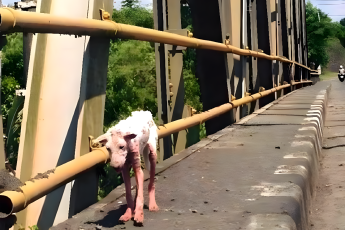
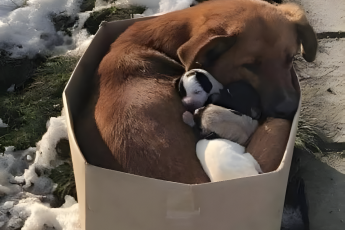
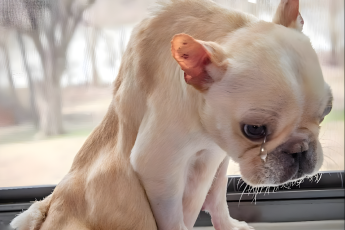
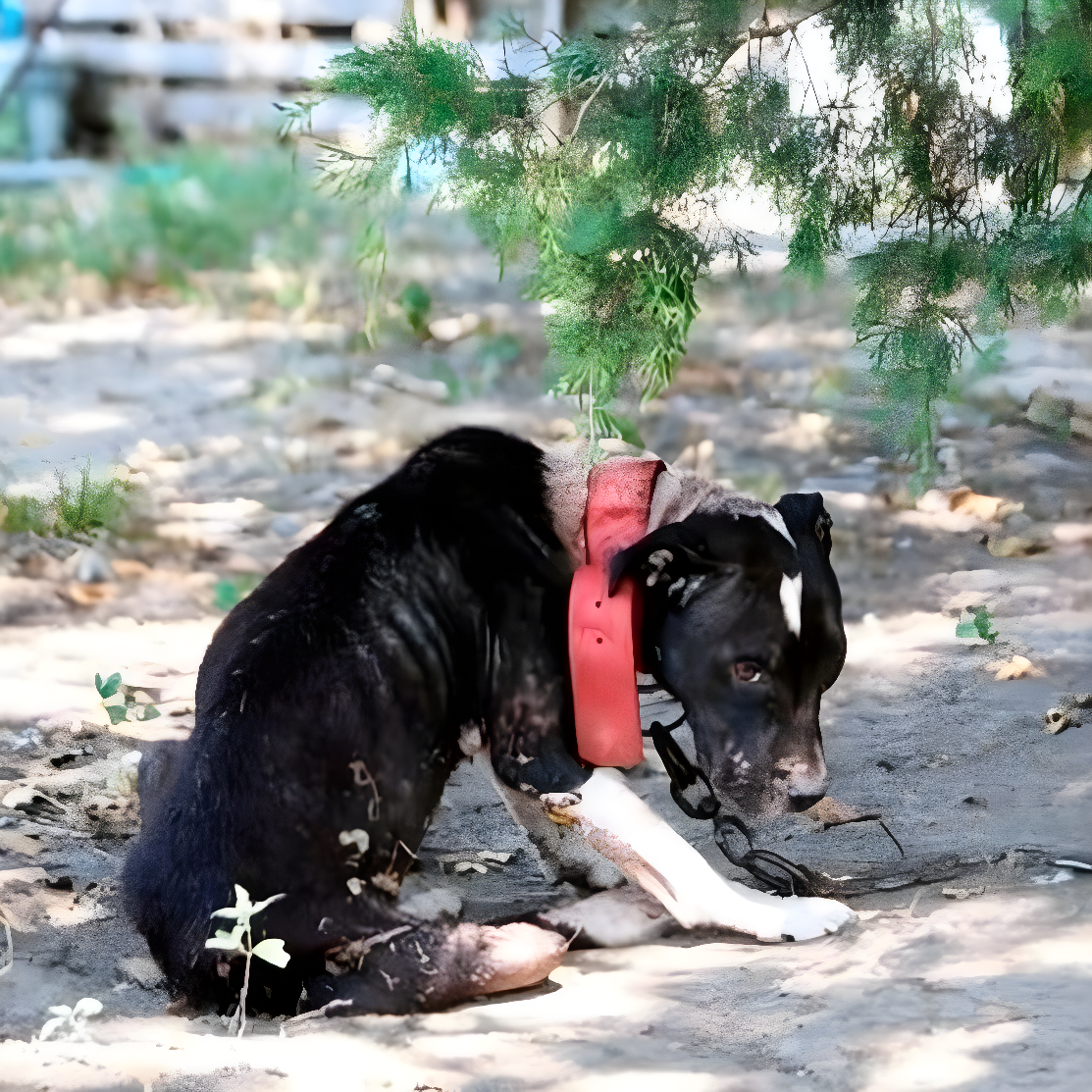
 I spotted her from across the lane — a wafer-thin dog, almost translucent, wearing a red collar that seemed to weigh more than the animal itself. That afternoon the summer held back its theatrics: heat smelled of dust and the sun-scorched fence boards. My volunteer crew and I followed an address pinned in our chat: “Third house after the stop, chained in the yard. Barely moves, no water.” Messages like that lodge in a person’s mind the way burrs cling to fabric: unnoticed at first, then impossible to ignore.
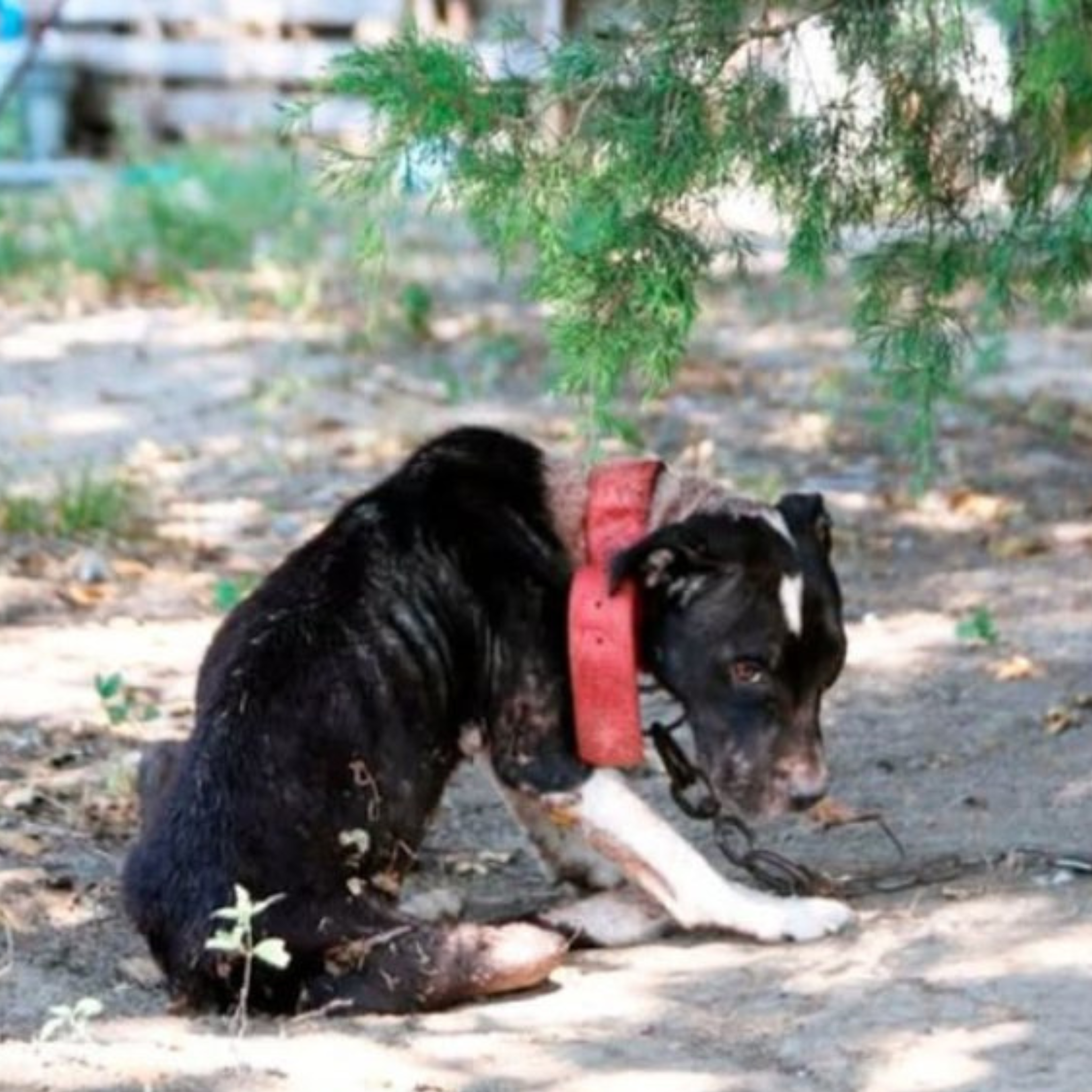 The yard was unnaturally quiet — the wrong kind of silence, like a radio left tuned to static. Discarded household life lingered near the gate: a tipped bowl, a laundry line knotted into a branch, a rusted shovel leaned against the wall. Beneath a strip of shadow an outline shifted: she swayed gently, like a delicate metronome, head down where the chain dug a thin furrow into the soil. Her ribs told stories of neglect with every inhale.
“She was there, but barely alive,”
A neighbor who stepped onto her stoop with a towel told us the owner had left in spring for work and never returned. She admitted tossing a crust now and then, then shrugged as if the gesture itself absolved everyone. When we pressed whether anyone had been called, the woman muttered that they had phoned authorities, but ‘‘who needs us?’’ — the kind of answer that closes doors rather than opens them.
We knew the legal lines and the options where action was required. The neighbor finally made one more call, and we rang the vet. A patrol officer arrived, younger than the image we’d expected, with eyes like someone who has seen many highways and the people who live by them. He lifted the chain and examined the collar, then calmly recorded an abandonment report.
Immediate steps:
- Record circumstances and take custody of the animal.
- Transport to clinic for urgent assessment.
- Open an investigation into ownership and responsibility.
We moved slowly toward her. She didn’t growl or snarl — she slid her nose away as if ashamed. Under the collar, skin was pale and damp; she could hardly stand. Two of us lifted her like an old sled hauled from snowless fields. At the clinic the antiseptic and chamomile mixed in the air. Dr. Marta P., who knew our group, set an IV, clipped the matted hair on the neck, and gave a warming injection. For the first time since we found her, the dog raised her eyes — not at us, but to the lamp, where a single fly circled.
“She’s clinging to life,”
Marta listed the facts: severe underweight, anemia, wounds around neck and paw. But the heart beat steady; that, she said, gave them something to work with. We took turns staying through nights while the drip kept time. Every hour I sat close and wrote the progress into the chat: small notes that mapped a fragile recovery.
When the rhythm of breathing steadied, I found myself whispering to her, words soft as paper: I don’t know your name or the maps you’ve seen, and I’m ashamed for the people who forget that living things can’t survive on hope alone. But listen: your yesterday ends today. I can’t promise a smooth road, but I promise to stay while you learn to trust a hand that doesn’t hurt. You may be the most fragile thing in the room now, but the world will make room for you yet.
Recovery milestones:
- Day 4 — first shaky steps to the bowl.
- Week 2 — steady weight gain and clearer eyes.
- Ongoing — rehabilitation of trust, desensitization to sudden movement and dark.
On the fourth day she shuffled to the bowl and hesitated before taking food, as if seeking permission. We named her Krapka — a small dot in a long sentence of life — an improvised name that stuck the moment she tilted her head at the wind and seemed to smile.
Dr. Marta scanned for a chip and found one registered to an Elena Sergeevna in a frontline town. The number was dead, but the registry gave us a lead. We posted a brief notice and the responses came in waves: advice, anger, stories like this one. The registry returned only silence; no return call from the listed owner.
“Her record points east,”
Meanwhile, Krapka gained strength: amber warmth crept into her gaze; she grew steadier on her paws and learned we wouldn’t cross the line between hand and harm. The neighbor with the towel began to bring small offerings and, over time, admitted she found it hard to leave without checking on the dog. People shifted in subtle ways. A donated box of bowls and leashes arrived at the shelter and for the first time Krapka wore a proper strap — slender and warm as fresh-baked bread.
One evening a teenager and a woman stood on the clinic threshold clutching a crumpled printout of our notice. The girl called softly, a name that sounded like a memory: Sonya? Krapka froze, ears pivoting as if an old tune tapped the gears in her chest. The girl stepped forward, sank to her knees, offered her palm, and breathed, “Sonechka, please.” The dog nudged her forehead into that hand and made a small sound that housed a breath, a sob, and the barest hint of a laugh.
Reunion facts:
- Girl: Alina — daughter who escaped conflict and believed her dog lost on a road filled with checkpoints.
- Mother: Elena Sergeevna — recorded chip owner, uncontactable until later.
- Outcome: Temporary guardianship transferred to Alina while the dog completed recovery.
Alina explained that they had fled from a city torn by conflict. In the chaos the family became separated at a checkpoint; Sonya was taken in confusion. She had assumed the dog was gone forever. Seeing the white spot on Krapka’s forehead and the collar confirmed what the girl had only dared to hope.
We drew up temporary custody documents and scheduled the chip registration transfer to Alina. The vet outlined behavior traits to expect: fear of sudden movement, difficulty with darkness, the need for structured walks and patience. Alina promised she would keep at it. Over days she came twice daily, reading aloud to the dog while she lay at her sneakers, both of them forming a new rhythm of trust.
“Leave the red collar with us,”
When word reached us that Elena Sergevna had been located alive in a hospital, the small current of hope swelled. The mother arrived pale but present. Sonya shot out of the car and bounded straight into the reunion she had practiced in her sleep. Elena asked for the red collar; we returned it to her with a quiet request: let it remain with us as a reminder — a token that chains can be loosened and lives rewoven.
The family left under a clear sky that tasted, oddly, of honey. A week later a postcard arrived with a printed photograph: three faces—Alina, Elena, and Sonya — smiling as if laughter had not forgotten them. On the back, words in careful handwriting thanked us for being their dot, the small mark that allowed a new sentence to begin.
Conclusion
This was not simply the rescue of one animal. It was an unfolding of choices: not to look away, to convert small acts into a bridge between loss and recovery. A broken collar became a lesson; a chipped microchip, a map; a shy dog, the center of renewed family life. Where silence once stretched like a field of dust, people began to speak, to visit, to carry food and time. The story closes not with a period but with a renewed clause: when we remove barriers and answer the small alarms that tug at us, we create space for second chances. Keep looking — for the thin, the quiet, the nearly invisible — because often, where neglect ends, life begins again.
Postscript: the red collar now hangs in our supply closet. It’s a quiet token: a reminder that sometimes the smallest interventions unchain the most stubborn hope.