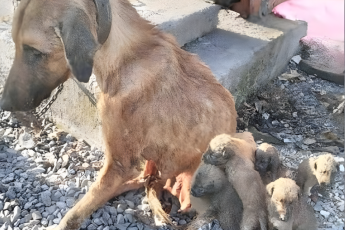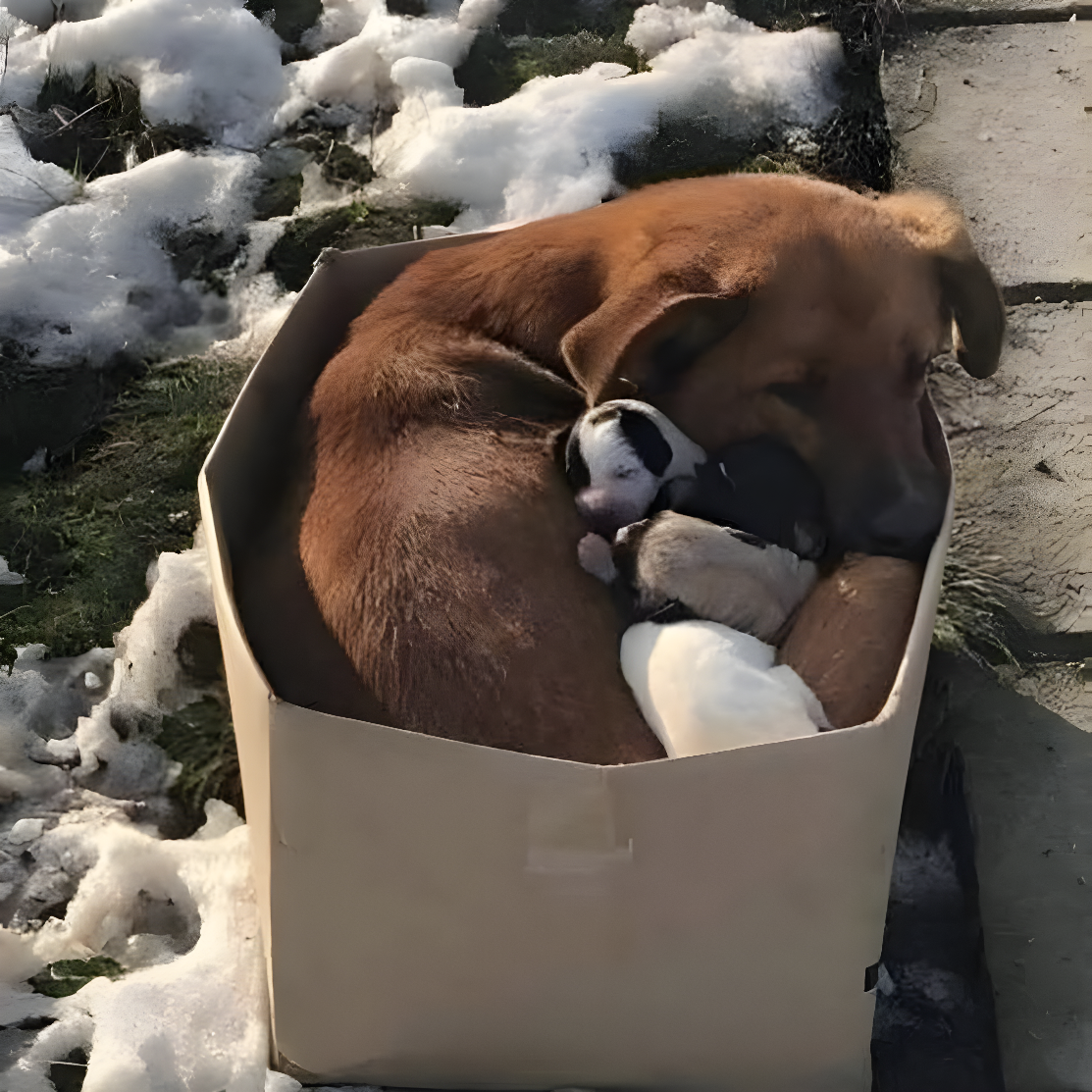
In the chill of a November cityscape, I stumbled upon a dilapidated greenhouse located at the edge of a market. The air was thick with the odor of burnt debris and dampness, as I pushed through the disheveled remains of the structure. Amongst shattered crates and scattered plastic, I discovered a weathered apple crate which cradled a thin dog with wet sand-colored fur, as gaunt as the bones that framed her figure. Beside her, tightly curled like small, fragile packages of life, were several nameless pups engaged solely in the instinctual act of nursing. Quietly, I knelt and immediately named their mother: Teya.
She didn’t flinch; her eyes assessed my presence, discerning any threat to her offspring. There was no pleading in her gaze—only a concentrated effort: to sustain, to provide warmth, to expend energy that seemed borrowed from a world now long gone. The wind rustled the plastic; one of the pups emitted a soft squeak, causing the stillness around us to become heavy with unspoken weight.
— Call animal control, the guard announced, appearing at the threshold. — They’ll handle this ‘by the book.’
I replied that I would contact a vet because paperwork can calm conscience but doesn’t warm bodies. The guard hesitated before handing me a worn piece of oilcloth and a shaky electric kettle: “The outlet is still live; boil water, we’ll make a heating pad out of a bottle.” In these simple objects, I suddenly saw a form of salvation, something tangible beyond bureaucratic and official help.
We set up a makeshift heating arrangement: a hot water bottle resting inside the crate, with a rolled-up sweater providing insulation, as Teya—calm and focused—began to do what one is not taught in training: holding several lives in rhythm with her own breath. Her demeanor resembled that of weary midwives—not due to exhaustion of strength, but from the depletion of resources she still hoped to distribute. I dialed the clinic; a young vet spoke earnestly yet compassionately: they would arrive within forty minutes, and I needed to keep an eye on the position of the puppies’ heads, reacting to any shiver from their mother.
What We Did While Awaiting Help:
- We heated the water and fashioned a heating pad from a bottle;
- We positioned the puppies safely to prevent suffocation during sleep;
- We covered everything to minimize heat loss.
During the wait, I spoke to Teya about myself—about the nighttime rituals of baking bread and the scent of flour, about the lost pregnancy that left me with a deep-seated fear of the word “mother.” I didn’t say this solely for my own benefit; vocalizing my fears might save the air between us from falling into silence. I told her I wouldn’t promise miracles but that I wouldn’t leave first, and I would do everything possible to prevent that small warmth, still swirling within her beating heart, from fading. Her breath grew steadier—and in response, the puppies nestled themselves into slumber, fattened by safe milk.
When the clinic crew arrived, they behaved as expected: calm, precise, without theatrical gestures. The team examined the mother—from her skin to previous wounds, from reactions to the temperature of her offspring—and reached a decision: transport to the facility, systematic feeding, and constant monitoring. Together, we lifted the crate; Teya didn’t attempt to rise, as if relinquishing temporary responsibility for her small universe.
By the clinic stood a man in a grey jacket emblazoned with the city service’s insignia. He addressed me not with hostility but with conviction about his role: according to protocol, the animal must be taken into custody by the services. I proposed a compromise: we would go together, witness everything, and avoid hasty decisions. After a moment, as he glanced at the sleeping puppies, he acquiesced: we would proceed together, but “the report must be thorough.”
Inside the clinic, the smells were sterile and warm: milk in bottles, soft blankets, and monitoring devices. They assigned us a box with an infrared lamp; the puppies were arranged in a half-circle, resembling an unfinished rainbow. The veterinarians detailed the plan: feeding schedules, monitoring weight, prevention of infections, and immediate contact upon the first signs of trouble. The man from the service sat in the hallway, rigid as a rule, but softened each time he heard a whimper from one of the puppies.
— Usually, procedures take precedence over feelings, the man remarked. — However, right now, please—let’s do everything we can because I see this world is hanging by a single breath.
The first days felt akin to nights in a maternity ward: the light, footsteps, rustling plastic, soft breaths of companions. I returned from my night shift at the bakery, thermos of tea and a stack of towels in hand—towels that we designated as “used” at work—and once again found meaning in small gestures. Teya ate cautiously, frequently raising her head to ensure her babies were still around. The puppies thrived; everything seemed to be improving until the sixth day.
It was then that a pain appeared, different from mere exhaustion—a stark sensation upon touch. The doctor examined the mother, palpating her lymph nodes, checking her temperature, and quietly noted concerns about postnatal complications. They initiated antibiotic therapy, intensive care, and the gradual introduction of a milk mixture for the puppies. We began to operate efficiently: I held her paws during the needle placements, others administered medications, while the man from the service stood in the doorway, hat in hand, as if this gesture granted him the right to be both helpless and human.
The night dragged heavily; with dawn, it became evident that Teya was weakening. She continued to nurse stubbornly, even as the light from the lamp began to feel insufficient. I placed my hand on her neck and spoke a simple truth: you can let go if you no longer have the strength. She looked at me in a way known only to those who have made an unspeakable decision—and soon her breathing became shallow. The puppies stirred more vigorously; such is the drive when one life delivers its last warmth to the others.
Morning broke through light. The doctor placed her hand on Teya’s chest and stated softly what was unuttered: it was the end. I did not scream or cry out—I sat still, holding her paw, feeling how the weight transformed into gratitude. The man from the service slumped against the wall and, with a tear in his eye, promised to handle the formalities so that no one would disgrace her memory with paperwork. He also requested to take one of the puppies home: his wife had been asking for warmth, and he himself needed to fill the silence in his house.
We divided the puppies like the light filtered between windows: ensuring no one would remain empty. Two were taken by the foundation, one left with a night pharmacist, another went with the man from the service, while two remained with me—I fed them with bottles during the nights, recounting the scent of bread at four in the morning. Teya’s funeral took place behind the greenhouse, on soft earth; I crafted a small plaque bearing her name and a single word that encapsulated the essence of her life: “PERSISTED.” The guard found old solar lights and set them near her grave—at dusk, the light was gentle, as if reluctant to make noise.
What Remains from This Story:
- A new home for several puppies;
- A community that learned to respond with small gestures;
- A word of reminder: resilience transformed into action.
A week later, I returned to the clinic with a jar of cookies for the night staff. The man from the service sat on plastic, cradling a pup with a white patch in his lap. He smiled sheepishly, announcing that they named him “Pumpkin”—because he was warm and plump, and their kitchen once again smelled like soup, rather than paperwork. In this transformation lay meaning: in a house where cooking began, life also began anew.
In the spring, a yellow flower sprouted by the greenhouse—a remnant of someone else’s past gardening experiences—and the place no longer appeared abandoned. The plaque that read “PERSISTED” became a kind of testament: not only to an end but to a choice—one life gave so much warmth that others could continue. In my apartment, two puppies grew, and the aroma of flour and milk in the kitchen ceased to fill the void left by loss; it transformed into an invitation to a daily life where one could openly embrace their sensitivity.
Final Thoughts:
- The simplest gestures often rescue more than procedures—a hot bottle, a warm blanket, or simple presence;
- A community comprises those who can transform formality into humanity;
- The memory of a devoted life can manifest as action: adoption, care, cooking with love.
When someone asks me today: who was Teya, I reply succinctly—she was not just a dog, but a source of warmth for three who survived among those who remained. Her gesture ignited change: the kitchen now wafts with soup, the clinic echoes with more laughter, and on my hands, there is no longer shame when I say aloud: I want to be a mother to those whom fate cast aside. And if hope has a scent, it is that of flour on my fingers and words that dare to be spoken.
Summary: Teya’s story serves as a reminder that small acts of kindness and collective involvement can change the course of events. Sometimes, one life given to another becomes the spark that ignites warmth in many homes.