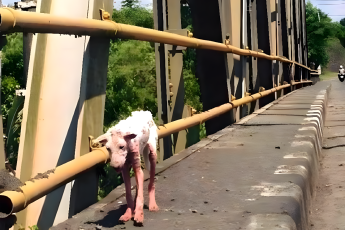
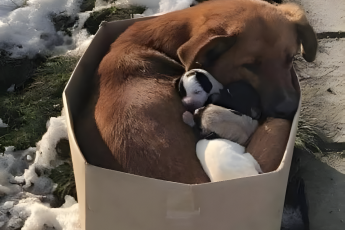
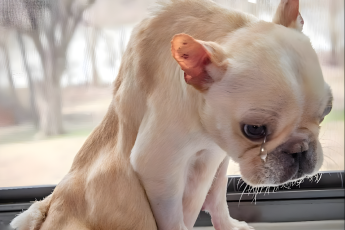
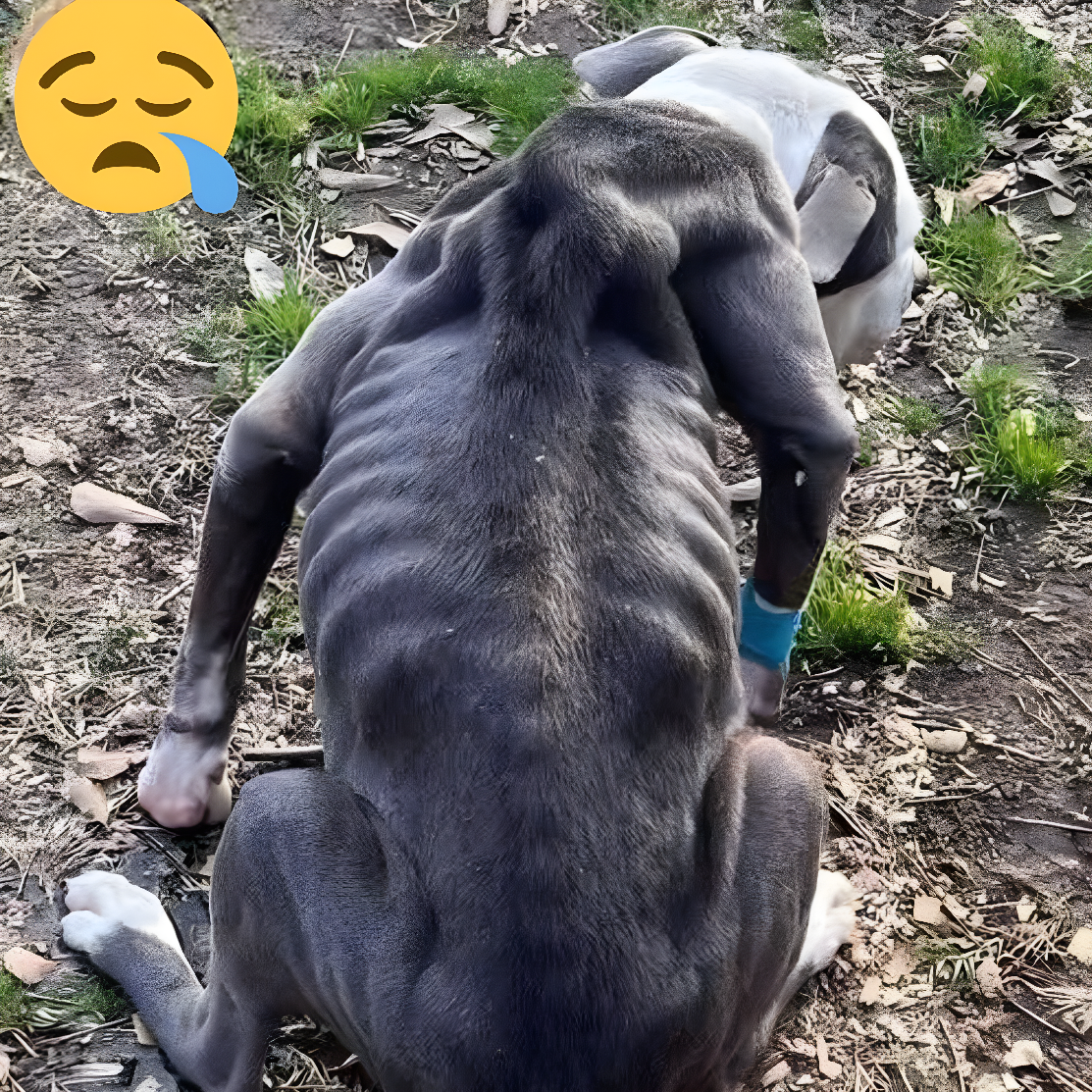
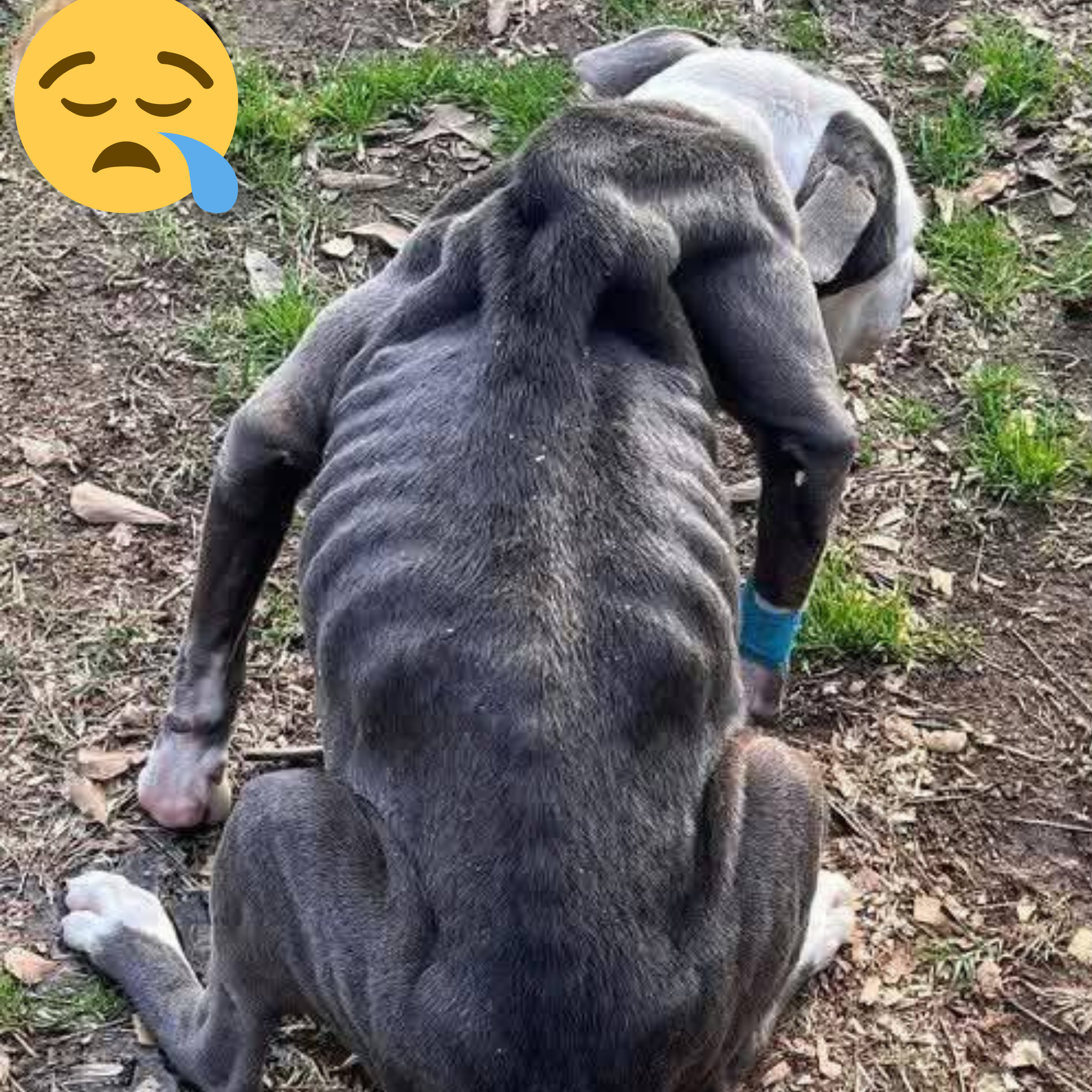
 I stared at this photograph for a long time before shaping the words. The dog in the frame was a gray silhouette of a life nearly gone—skin stretched tight over bone, a thin blue band around a paw, and earth that hadn’t felt someone’s careful steps in a long while. Most feeds would offer a startled comment, a sad emoji, and then scroll on. But behind that single image lay a path that began one late March afternoon by a row of garages, where the wind moaned through metal like an empty bottle.
The smell reached me before the shape did: wet fur and rust. She sat half-turned, the posture of something weary in its own skin. When I closed the distance, she didn’t lift her head; she inhaled so deeply it felt as though she tried to keep me inside the memory. I took a small can of pâté from my backpack, set it nearby—near, not intrusive—and crouched. Her tail moved in a little circular salute, not the brisk wag of health but a polite greeting to the world. I named her Sera at first; later that name softened into Serafima. Rescuing was not my divine skill—it was a quiet, human kindness that happened between people.
Immediate steps that saved her life:
- Veterinary stabilization: IV fluids and warmth
- Small, frequent feeds and monitoring
- Slow, measured physical rehabilitation
The vet said little and did exactly what was needed: a drip, gentle warming, measured portions, tests. Serafima’s body resembled an anatomy diagram—each rib and joint identifiable. We placed a bowl near her and learned patience. She ate as if relearning how to hold life in her mouth, then closed her eyes to savor it. Her first awkward attempt to scratch an ear ended with a soft slip of a paw on the mat. I caught her gaze and smiled. From that honest, almost ashamed grin, everything began to change.
“The goal wasn’t a miracle overnight but a steady rhythm,” the vet explained. “Quiet steps homeward.”
At the clinic a woman with cropped hair and a tired voice stood by our partition and shook her head.
“Where did you find her?” she asked. “That’s a skeleton, not a dog.”
I answered plainly: “By the garages. A guard said she appeared ‘like a shadow.’”
She sighed and offered something more valuable than cash: “If you need gauze or a blanket, I have five at home—one will do.” Her words were a promise of presence. I wrote her number in my notebook, the place where I keep essential things: names, feeding schedules, vet appointments.
Small acts that mattered:
- One blanket that implied, “I’m nearby.”
- A child’s soft ball left on the mat
- Regular check-ins from neighbors
Three days later Serafima tried to rise. A tremor passed through her tail and spine as if someone inside tapped each vertebra to see if it still answered. She stumbled against my thigh, pausing as if to ask permission to continue living. I rarely speak when people suffer, but I found my voice then: “You are good. We will manage.” The vet warned of a long recovery—weight gain in tiny stages, careful activity, warm nights, and patience. “Speed kills when hunger has starved the body,” he said softly.
Our life contracted into that cadence: tiny portions at dawn, a cautious stroll by the clinic door in the afternoon, a flashlight at night to guide uneasy steps. Serafima learned to sleep on her side so protruding bones wouldn’t press her awake. She learned to sip water in small mouthfuls. She relearned trust. Every day her body returned inch by inch; every day my amazement at the human capacity for surprise remained undefeated.
Who helped along the way:
- A neighbor who left a thermos of tea
- A young man on crutches who kept bringing small donations
- A twelve-year-old girl who gifted a toy
People chimed in online: some questioned the priorities of helping an animal when people suffer; others quietly donated a few coins or asked for receipts (transparency heals doubt). Most touching was a neighbour’s child who left a small soft ball with instructions to keep it close by—”so she knows she’ll have toys, too.” I added that child’s name to the notebook as another quiet ally.
Two weeks on, Serafima gained a meaningful hundred grams. We celebrated every fold of skin that filled out, every millimeter of fur that lay smoother. She began standing without my support and walking the clinic corridor to the window where light warmed her gray back. She was still skin and bone, but now the word “path” tagged along with it—a path toward life.
One evening the clinic lost power. This is no longer an emergency; we pulled out a generator and battery lamps. A paramedic from the neighboring post walked in, set down a thermos of linden tea, and asked if she could sit. She put her boots near Serafima and, without ceremony, Serafima rested her head on them. “Sometimes,” the paramedic said, “when I’m out on calls I lose faith in people’s kindness. Then I come here and remember.” Her silence was an offering.
Community moments that changed everything:
- Shared thermos and quiet company
- Donations collected in small envelopes labeled “from Serafima”
- Neighbors who simply sat and watched her breathe
A month after we found her the vet finally said something that made me cry: “It’s time to look for a home.” He added conditions: weight checks, scheduled feeding, short walks only, and follow-up exams. I began writing a post that would do more than ask for pity; it would ask for action.
Calls arrived. A man asked about discounts on food; I explained responsibility is not a commodity. Another promised an outdoor yard and paused when asked where the dog would sleep in winter. Neither fit. Then, on a Saturday, the young man who had once come on crutches returned—now walking with a cane. He carried a package and sat beside our partition.
“My name is Yegor,” he said. “I’m rehabilitating after injuries. I need quiet, steady walks—an hour a day, not rushed. The center told me to learn to walk for the sake of walking. When I saw her in the feed, I thought we might suit each other. I can go slow. I can wait.”
We went into the yard. He handled the leash with the gentleness of someone holding a thin thread. Serafima kept pace, glancing back. At the gate they paused together, breath syncing for the span of a second. I held myself from guiding fate. Inside, everything already knew what to do.
Three days later we visited his home. On the table lay a printed feeding schedule and a simple list of questions. He didn’t promise perfection; he promised patience. We agreed to a trial weekend. Back at the clinic, I felt like a fragile object being put on a steady shelf.
On Sunday night a message arrived: she had eaten on schedule, slept long, and simply sat beside him on a bench. “Can we try for forever?” he asked. I signed a caretaking agreement, left clinic contacts, and noted another name in the notebook—this time beside the word HOME.
A follow-up visit found a small, calm household. Yegor opened the door with a steady smile. Serafima emerged cautiously, then placed a paw on my boot as if to check I’d not been a dream. A child from the next building had been coming to tell her stories; on the mat sat a pink pompom hat. “She says her inside is warm now,” Yegor explained. I wanted to sob again—but this time at the sight of something healed.
“Two chairs, a rug, and a dog can be enough to make someone whole again,” I thought, watching them.
Summer came and we lengthened their walks a little at a time. Yegor mapped small paths like earning badges for patience. At his rehab center they asked to bring Serafima sometimes so people learning to re-enter society would have a quiet, steady presence alongside them. One man, hardened by history, watched her and then did his reps, pausing to press his forehead to her back when he finished. That day a book of slogans wasn’t needed—her calmness taught louder than words.
Then an unexpected letter arrived at the clinic: the local administration invited Serafima to participate in a program called “Quiet Volunteers,” designed for animals who offer steady support without fanfare. We agreed, arranged insurance and records, and soon each Wednesday she “went to work”—a once-abandoned dog delivering steadiness to others.
What the program achieved:
- Official recognition of the therapeutic role she played
- Regular visits to rehabilitation sessions
- Small donations from walks collected for other rescues
Each month Yegor and Serafima send a small envelope to the shelter labeled “from Sera”—spare coins gathered from walks and from people who thank them with treats. I sign the receipts like a list of doors that will be opened for the next shadowed animal.
Sometimes I pass the same row of garages. The metal still whistles, the smell of oil and fatigue remains. But now another memory lives there: a mat by a window, a steady breath, a cane leaning in a corner, and a dog learning to speak loudly with her presence. That is why we do this—not out of fleeting pity, which fades quickly, but out of respect for life’s stubborn insistence to keep going.
How you can help today:
- Bring a blanket or ball to a local clinic
- Offer a thermos of tea or a few spare coins
- Share verified needs on your feed—one post can connect a dog with a patient human
There are no fireworks at the end of this tale—only a quiet evening light in a window, a dish on a table, and a blue band folded on a chair as a reminder of when everything hung by a thread. Yegor sets his alarm; Serafima curls at the foot of his bed. I close my notebook where names line up under the heading “those who didn’t pass by.” I cry not from sorrow but from relief: the dog once called a skeleton has become a quiet volunteer. Despite the country’s weariness, the capacity to care endures.
Conclusion
Serafima’s story traces how individual, deliberate compassion patches ruptured lives. Healing required nothing miraculous—only steady routines, community gestures, and one person willing to match a fragile pace. If you feel able to help even a little: bring a blanket, drop by with hot tea, donate a toy, or ask a shelter what they need today. Your small act might be the hinge that turns a shadow into light.