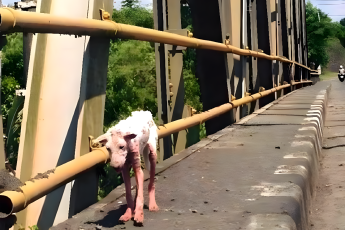
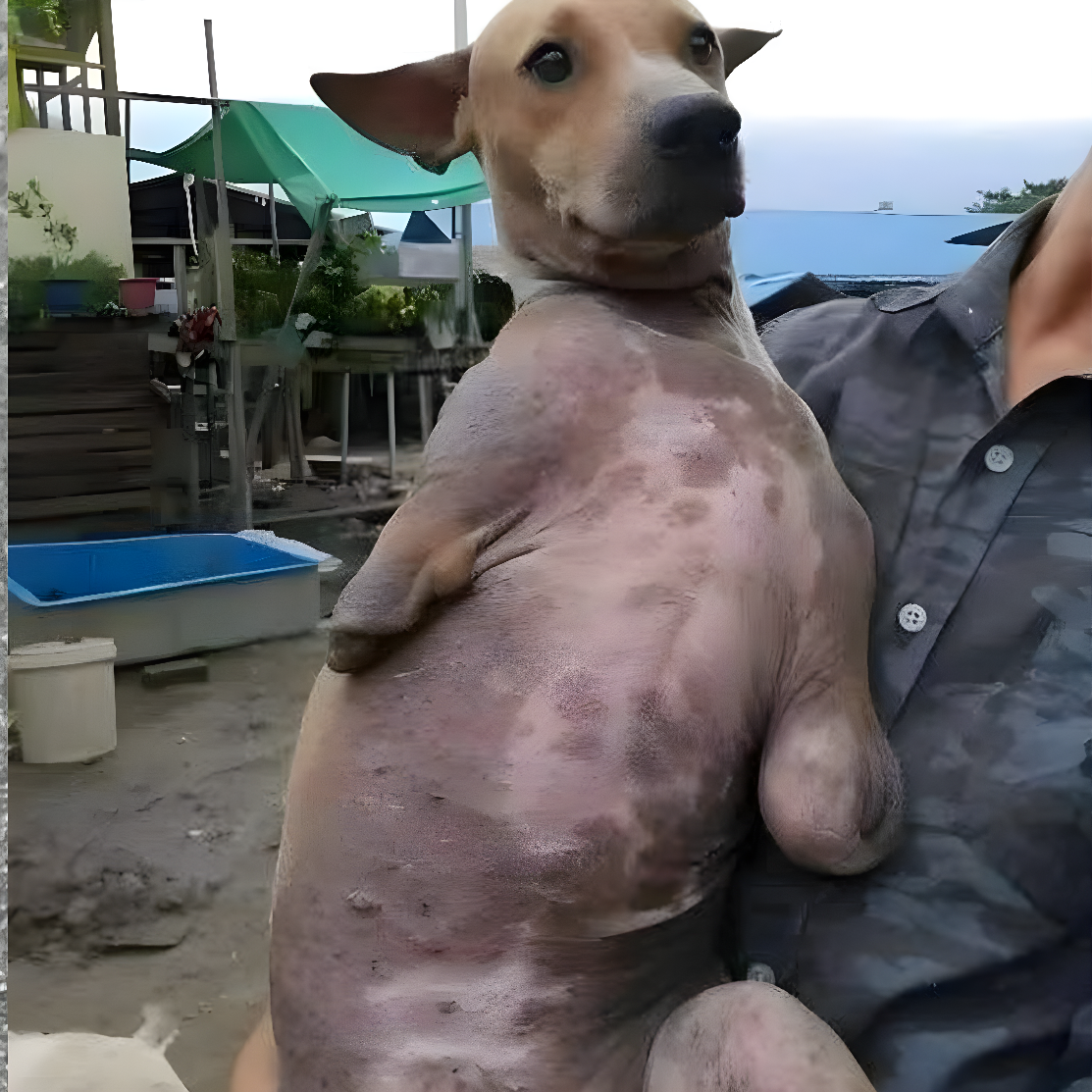
 I first saw him between stalls — amid plastic basins and jars of homemade sour cream — sitting on a stained tarpaulin at a vendor’s stand as if trying to make sense of the world that had been put before him. His body was an oval shape, nearly bare; the skin bore a map of old scabies and half-healed allergic lesions. His front limbs looked as if someone had tied them in a knot and forgotten to loosen it: short, curled under, awkward. Still, he balanced himself, neither collapsing nor whining — simply enduring. A woman in a floral sweater nudged him and hissed that he was in the way; he slid a little sideways and kept watching the passersby with those round, asking eyes.
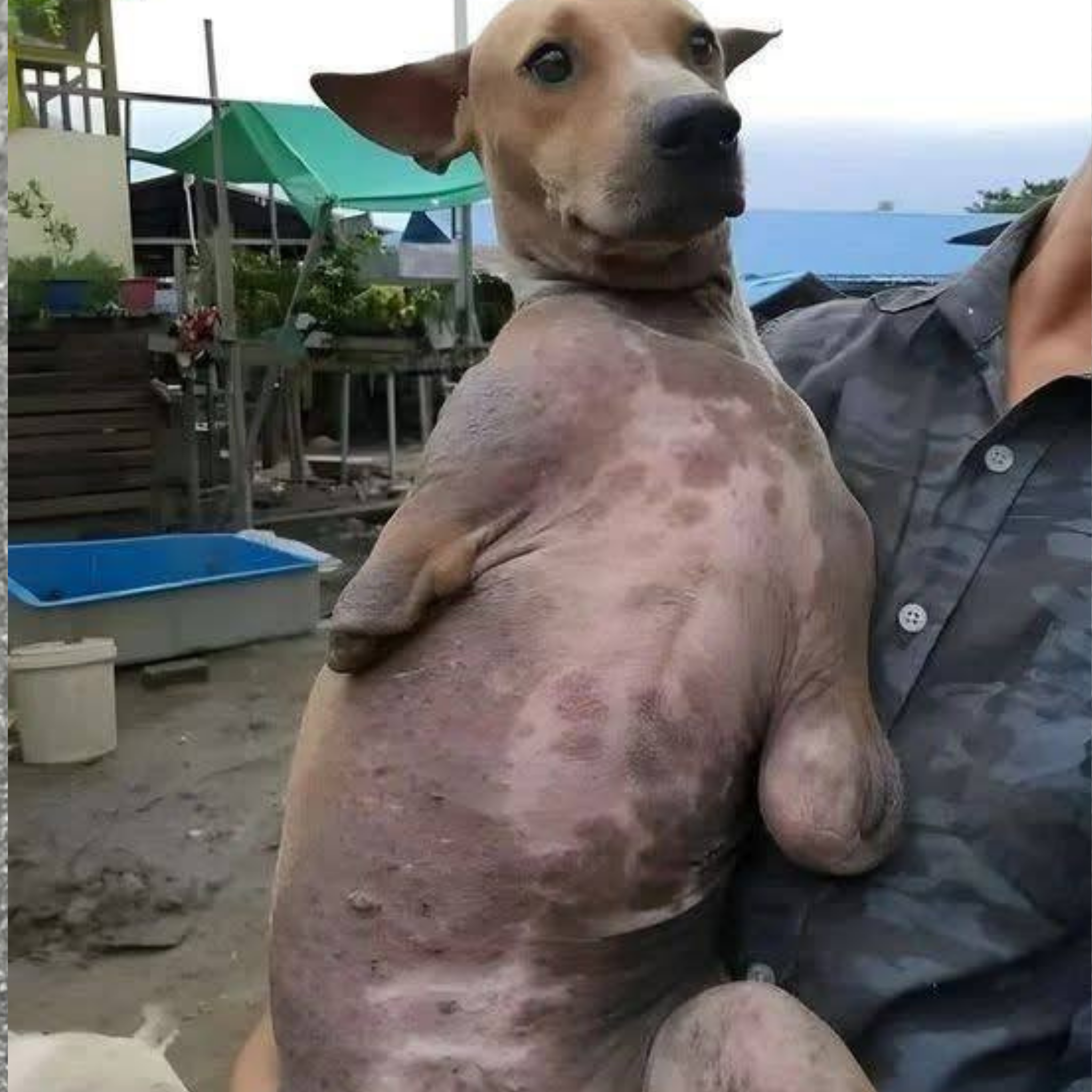
I worked at a small kiosk called “Make a Key” and watched him over a glass of sweet tea. The market air smelled of flour, chicken fat, and the sharp note of new plastic; he belonged in that mixture like an old word in a fresh song. I’d seen many dogs — scarred, world-weary, with tails that remembered sins — but this one had the clumsy grace of a boy at his first dance: ill-fitting, trying hard not to be noticed.
When the market quieted at dusk and shop windows took on their cold shine, I walked over with a scrap of zrazy from my lunch. He took it politely, careful not to nip my fingers, and breathed as if the air weighed more in his chest than in others’. “Let’s go,” I said. He hesitated like someone used to being an outsider, then allowed me to lift him as one lifts a sleeping child. In the stairwell a neighbor with a bag of onions muttered, but I placed him on a rug near the radiator, set a bowl of water down, and watched him sip with the slow economy of one who’s learned to ration not only food but also gratitude.
“He will live,” the veterinarian said, after an assessment. “Those front legs are a congenital deformation — they were never treated. The skin will recover, parasites out; the main issue is how you will manage to carry him.”
I shrugged. My life already held its share of burdens — empty rooms in winter, a man who returned only for money, the city queues where nobody waited for anyone. Carrying this dog felt like keeping my life from sliding off the table.
We named him Kulka — “the little ball” — for the roundness of his body and the soft steadiness in his gaze. Baths, cheap shampoo, and tender hand-washing followed. He tolerated my clumsy ministrations and fell asleep by the radiator; I sat with him and listened to his even breathing as snow crumbled outside and the old building clicked and settled in its winter sleep. A hollow inside me seemed to find a shape to fit.
Small rituals kept us steady:
- Daily walks across the courtyard between lime trees and cigarette filters;
- Evening feeding of roasted pumpkin, which he seemed to treat like a warm story;
- Ongoing ointment applications that slowly brought shine back to his skin.
Children asked bluntly about his short legs; I answered that he was special. Adults looked away — the way people do when they don’t know what to do with discomfort. A neighbor dropped off expired dog food from his shop; another pushed a bag of groceries up the stairwell. One day a man arrived at the door holding that very bag and mumbled that he thought a neighbor had thrown the dog out; he smiled oddly and called Kulka “a box of secrets” before disappearing down the steps with an offer to bring more supplies.
Spring brought volunteers to our courtyard with thermoses and donated goods. I set out a sweater and cups; that’s where I met Olya, a thin girl of ten with tired eyes. She approached and, after a moment of hesitation, began stroking Kulka the way one touches a thawing relic: careful, wondering, afraid to soil her hands. She told me her family was living in transition, her mother washing stairs for work. Olya had been in our school on an “individual program” and sometimes asked to walk him. I let her — Kulka walked beside her the way a small planet circles a steady star.
Nazar joined us soon — a boy with a bright face and one missing finger, a child who’d learned to make the world fit his hands. He carried Kulka as if cradling something breakable: under the chest, support on the belly. He had a quiet steadiness that made him teach others a different grammar for living.
Moments that changed everything:
- An afternoon by the river feeding ducks when a passerby’s scooter sent a boy tumbling into us;
- A near-accident when a gray car clipped the curb; Nazar shielded Kulka and took the brunt of a fall;
- The gradual arrival of a man who would one day call the dog Barkas — the name on an old photograph he carried.
After the scare with the car — when the neighborhood went silent and the driver muttered excuses — we came home shaken but alive. Kulka lay in Nazar’s lap and breathed rapidly; the boy’s torn jeans and scraped knee were small proof that something essential had been protected. Later, rain and then sun: Kulka’s coat filled out, his skin softened, and people began to greet him by name on the benches.
“He carried us across the worst waters,” the man said when he finally appeared at our door with a faded photograph. “We called him Barkas.”
The man explained he’d been away in the army and returned to find his life altered; a sister left town, apartments closed behind other people, and the dog had disappeared into the city’s margins. He showed us the photograph — a young soldier and a dog with similarly twisted forelegs, smiling into the camera. He had searched, he said, and at last had found his Barkas sitting in our courtyard.
I couldn’t give him a rush of decision. Instead I proposed something: don’t take him back all at once; come into our lives slowly. Visit an hour at a time, then more. Let the dog acclimate. He agreed with a quiet nod and began coming evenings. It turned out that the man’s son was Nazar. The neighborhood shrank into a circle; the three households discovered a new way of being a small community.
How we organized care:
- Shared nights: Barkas slept alternately between the small apartment and my building;
- Two bowls and one blanket became symbols of a blended custody;
- Evening walks were now a trio: me, the man, and Nazar — sometimes with Olya running between us clutching a carrot as a token of affection.
Autumn brought health scares. Kulka’s heart faltered and we spent long hours in the clinic holding his head, promising him that if he was tired, we would understand. Dawn after dawn, he lifted his head and looked at us like a captain who has been given a map again. Recovery was partial: slower climbs, heavier breathing on stairs, but his face held its peculiar, steady smile.
We threw a small courtyard party in October: paper garlands, two thermoses of cocoa, a pie baked by Olya’s mother, and a box of proper dog food from the neighbor who had once brought expired stock. Nazar read a short poem he’d written about a ball that doesn’t roll yet moves people; everyone fell silent and then laughed and wiped their cheeks. It felt like a homecoming of the heart.
One evening Olya’s mother gave me a small green cloth pouch. Inside, a simple metal locket engraved with a dog and beside it a child’s footprint: “From Artyom. For not turning away.” I had never met Artyom, but the gift — sent from someone who once feared the yard — sealed the invisible bridges our kindness had built across the neighborhood.
Key truths we learned together:
- Compassion is not always grand; more often it is small, awkward, and stubborn;
- Healing can be shared — one animal, two homes, many hands;
- Those who appear broken might teach the rest of us how to stand straighter.
In the end, the arrangement endured: two homes, one heart. Barkas — Kulka — slept by the radiator, short front legs folded like little wings, and the neighborhood moved a little straighter for his sake. People who might once have walked by now stop and pick up a stray, offer a hand, or bring something warm. The dog’s presence rewired the courtyard: laughter returned, people learned to open doors for one another, and children practiced tenderness where before there had been only avoidance.
Conclusion
The tale of Kulka/Barkas is a quiet testament to how one fragile life can reconfigure a community. Through patient care, shared responsibility, and the slow labor of ordinary kindness, a dog who should have been invisible became the axis of renewed neighborhood trust. Two apartments learned to share a single heartbeat; a boy without a finger learned new ways to hold; a man reclaimed a past and found a way into a present. The lesson is simple but powerful: when someone refuses to turn away, they invite others to stop hiding. Compassion, even when awkward or inconvenient, can become the scaffolding for a kinder life.
Where this leaves us: if you find a stray in need, consider gradual inclusion rather than instant judgment; small offerings — a piece of food, a borrowed blanket, a promise to return — can reshape destinies. Kulka’s crooked legs never straightened fully, but the path his presence carved through the courtyard will remain: people who once passed by now look up, reach out, and carry one another a little farther.