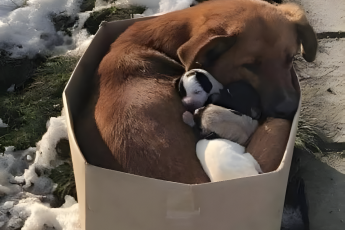
 In the hush before the clinic’s morning, I pushed open the heavy reception door and found a small cardboard crate warmed by the radiator. On the lid someone had scribbled one cold administrative word: “утилизировать.” The smell of breath and the tilt of a tiny head looked back at me — a spotted puppy with a pale pink nose and a narrow, unfinished palate. He was small enough to fit in my palms but big enough to change everything.
We had come to the clinic to mend bodies, but that day we started repairing a broken language: from “discard” to “care.”
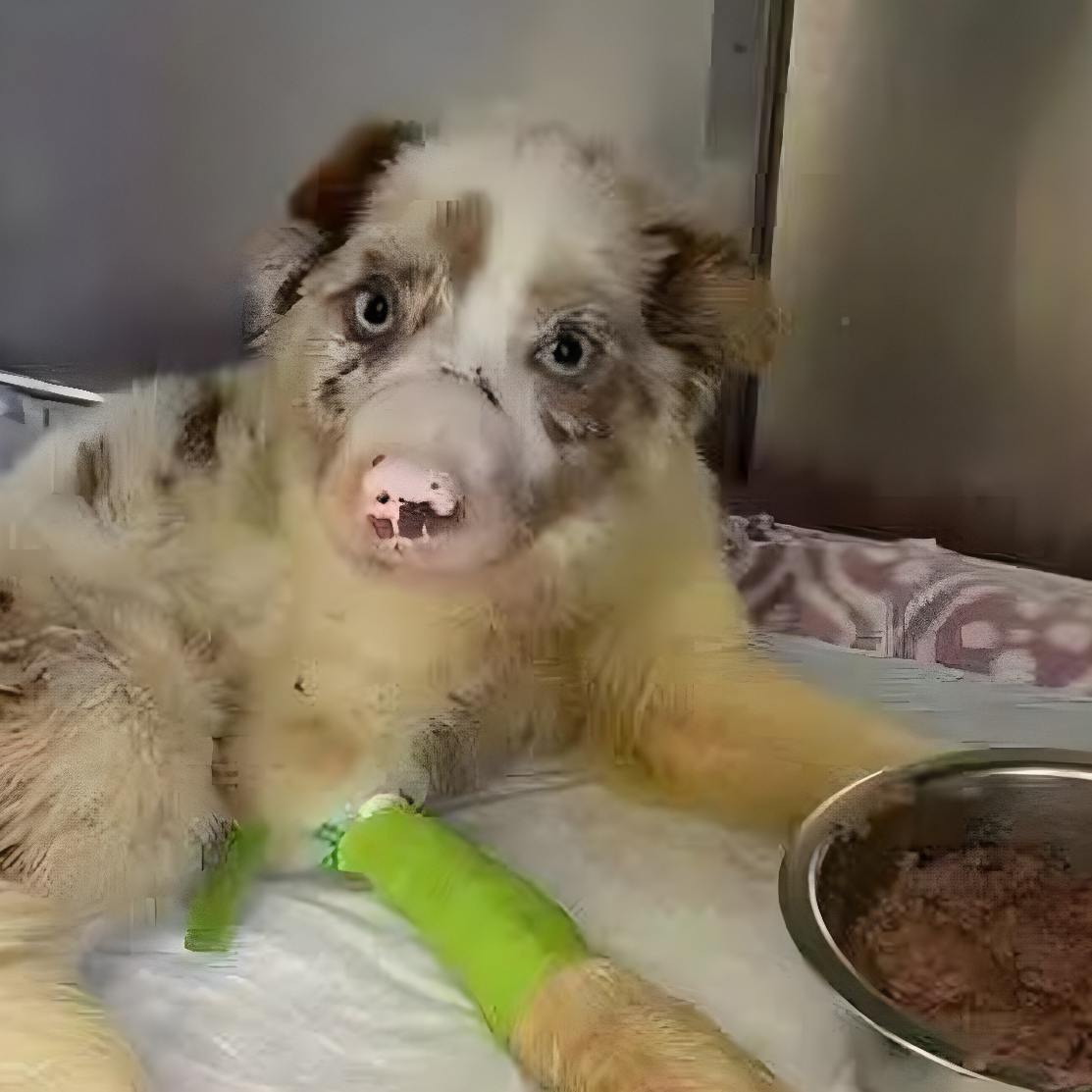
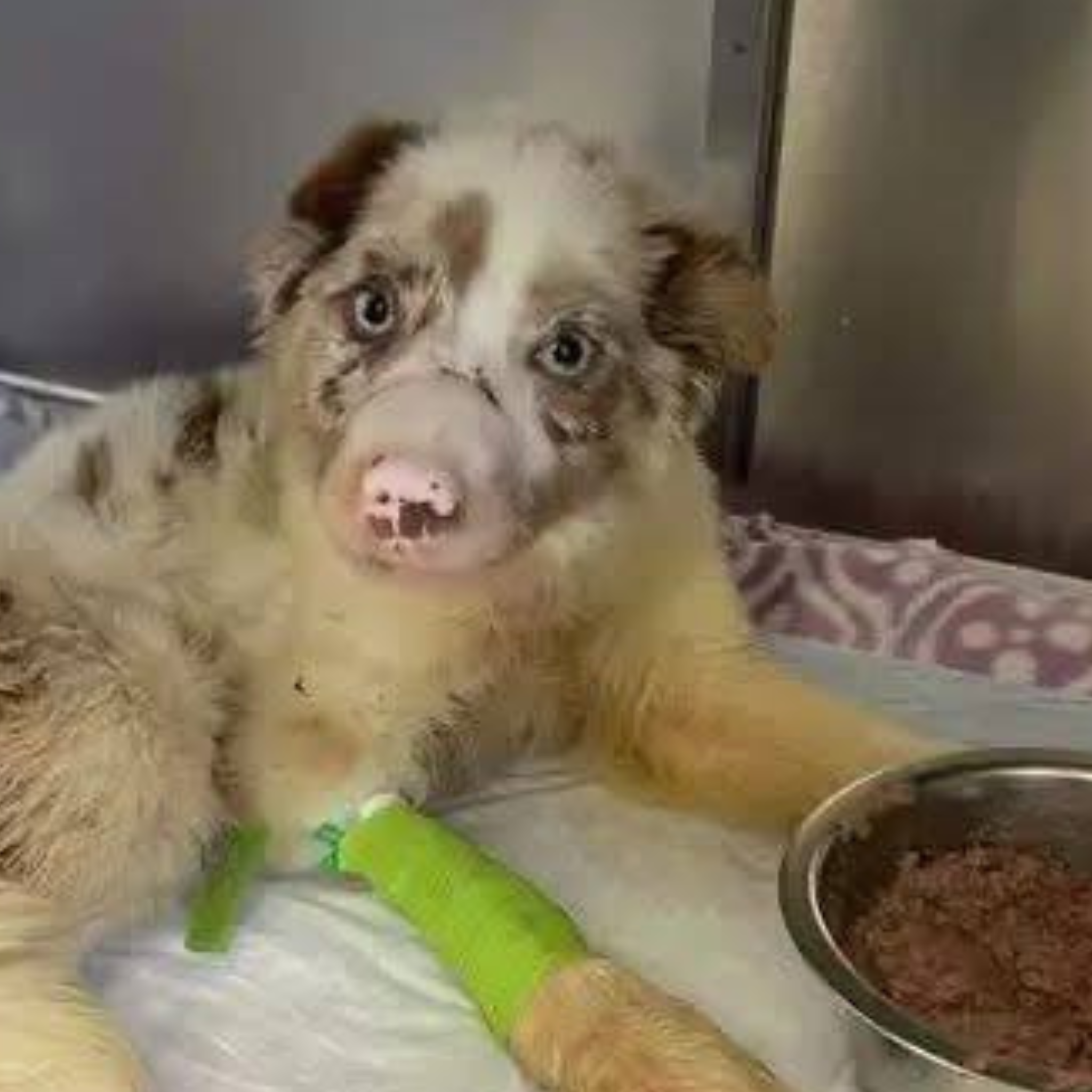
My name is Nika. I volunteer at a modest veterinary practice on the edge of town where mornings begin before clocks and hope. Dr. Vasilyevich — the surgeon with habitually smudged glasses and a dry joke about coffee — wiped his lenses, took the cardboard lid off, and muttered the first clinical diagnosis out loud: a cleft palate, not complete but enough that milk wandered where it shouldn’t. That explained the emaciation. The thin paw wrapped in tape was a makeshift bandage. The puppy did not bark; he lifted his head over the edge, breathed, and let the world check him like a tired patient.
We named him Plombir — a childlike word for a simple ice cream, a small, bright name to distance the animal from the violence of the note on the box. Dr. Vasilyevich smiled once and said, almost to himself, that we would have to fashion a fifth life for him; someone else had already spent four.
First priorities:
- Stabilize breathing and prevent pneumonia.
- Feed carefully to avoid aspiration through the cleft.
- Manage hydration and local wound care for the paw.
Those first days were long and meticulous. Plombir warmed himself on a grey blanket, submitting to IV fluids and tiny syringes of thick porridge fed drop by drop so it would not enter his nasal passages. We rinsed the dirt from his face with tepid water; he always found a way to soil it again. When the clinic quieted, Polina, the nurse, and I argued softly about where he had been born — a breeder’s backyard or a stray mother’s nest — but the argument felt small next to a cardboard label that decided fate with bureaucratic indifference.
“Some choose the easier word,” I told him one night while he slept, “and hope not to hear their own heart.”
We posted Plombir’s images online. The reaction was noisy and uneven. Some mocked his odd face; others put in small amounts of money and a single line: “Stay strong.” Comments asked whether saving such an animal was sensible. I answered each message calmly. Donations trickled in. Then, weeks later, a woman — Oksana — arrived with her son Marko.
Oksana wore a soft, timid smile. Marko was about ten, with an old, pale scar along his upper lip — a line that had once marked his own childhood surgery. He and Plombir met like two punctuation marks recognizing the same sentence. The boy crouched, the dog leaned his head onto his knees, and something irretrievable and lovely shifted. Oksana confessed they had experience with cleft repair; they had been through operations and healing too. She told us they would like to help — and asked if they could take Plombir home now.
What followed:
- A home visit check and a signed agreement.
- Medication, vitamins, and an operations timetable.
- A promise of follow-up returns for weighing and wound checks.
There was another surprise soon after: a plain envelope left anonymously at the clinic. Inside, a typed note and a folded copy of a short statement asking for euthanasia for a puppy with a defect — the handwriting seems rushed, the signature indecipherable. Along with it, a donation larger than required for Plombir’s surgery. Someone had once chosen to abandon. Now that same hand had offered help but not a name.
We did not publish that detail. Sometimes the act itself — a hidden apology — is enough.
March brought the operation. Snow still lay in slushy ruts by the bus stops. We scrubbed in and worked with the surgeon’s careful, discreet momentum. Three hours felt like a lifetime and a blink at once. Dr. Vasilyevich emerged from the OR with tired hands and the shortest of smiles: the repair had gone well. “Now,” he said, “patience, antibiotics, and measured joy.”
Marko sat like a small anchor in the waiting room during the surgery and gripped the chair edges afterward. When he finally saw Plombir waking in his lap, he exhaled as if a part of him had been stitched back too. The boy’s own scar, which he had once thought a flaw, now read as solidarity; the two of them mapped their similar histories and discovered companionship instead of shame.
Small victories that mattered:
- Plombir ate his first piece of carrot post-op without coughing.
- He began to gain weight steadily.
- Visits from Marko became ritual — stories, walks, and quietly taught manners.
Summer arrived like an apology. Plombir’s puppy fluff matured into a sleek coat and broader shoulders. The pink of his nose stayed unusual but no longer defined him. The neighborhood boys who once sneered now asked bluntly, and Marko answered simply: “He wasn’t ashamed to be born different.” I dropped in on them sometimes; the house had a guitar by the window and magnets on the fridge from cities they’d never visited but had been given. Plombir insisted on leading walks to water and poplars, proud as a dog who knows his world.
Kindness rippled. What had come in a cardboard box healed into a belonging that taught a neighborhood how to forgive itself.
Fall brought a school concert. Marko read a poem aloud — nervous, earnest, and imperfect in the best ways. He read for Plombir; he read for the man who once left the puppy at the radiator and later returned money and a note. That man sat at the edge of the auditorium, hands clenched around his cap like lifebuoys, and for the first time let tears fall without hiding them. Afterwards he approached, voice small and halting, and said he had been the one who brought the dog. He had feared his act. He wanted to say he was sorry.
Marko’s reply was simple and grown-up: that hate is easy, while living — repairing, forgiving, and learning — is hard. The man stood and listened as the group wrapped him in a quiet that had nothing to do with pity. No one demanded absolution; he offered gestures instead: food deliveries, occasional donations, even a toy pig he had once spared from the trash. Plombir carried that tiny pig like a banner down the clinic corridor one day, triumphant and absurd.
Lessons kept:
- Compassion is not a single heroic act but a string of small, steady ones.
- Repair can mean surgery, but it also means welcoming the remorseful.
- Belonging grows in the places we refuse to throw things away.
Winter came and went. Plombir stopped wearing the little scarf he’d once needed; he grew into a confident young dog who slept by the radiator sometimes and tolerated being called ridiculous names by admirers. He collected fans, but kept his most important friend in Marko — the child who once thought his scar was a fault and now wore that same line as evidence of survival.
Late one evening I sat in my apartment with the scent of antiseptics and kettle steam, hands smelling of fur and medicine and bread. I thought of the cardboard box and the anonymous envelope and of how many people had shifted their positions by tiny degrees to create a space where Plombir could thrive. It was not a tidy, single miracle; it was mutual, messy, and slow.
We learned to replace two words: “dispose” with “keep” and “discard” with “tend.”
On a warm spring day we held a small gathering: lemonade, ginger cookies, a long new leash, and the man with the tired eyes bringing a sack of food. Plombir climbed into my lap, heavier now and shamelessly affectionate, and sighed that same long breath he had given me the night I first sat by his crate. A tiny new scar in the shape of a heart appeared on his nose soon after — perhaps from a playing twig or a childhood nick. I liked to think nature herself added an emblem to match the one we’d made with our hands.
Final thoughts:
- One abandoned animal can become a mirror for a whole community’s capacity to repent and to love.
- Repair is not about erasing difference but about protecting it — letting uniqueness remain and be honored.
- Every one of us may carry a ‘fifth life’ within reach: a moment when someone decides not to throw us away.
That is why I still go to the clinic: to keep witness to those fragile chances. To be present when a life that began in a cardboard box is claimed back by hands that will not drop it. Plombir’s fifth life was not only a medical success; it became a living lesson about mercy and the small rituals that rebuild trust. In the end, we replaced a single bureaucratic verb with an entire practice: living.
Conclusion: A discarded puppy named Plombir arrived at a small clinic with a cleft palate and an uncertain future. Through careful medical care, community fundraising, and the steady love of a boy and his mother, Plombir had the surgery he needed and grew into a beloved companion. The anonymous remorse and later generosity of the person who left him highlighted how humans can err and then choose to make amends. The story shows that rescue work is both clinical and communal: healing bodies while reshaping hearts. In learning to shelter the broken, a neighborhood learned how to keep one another.