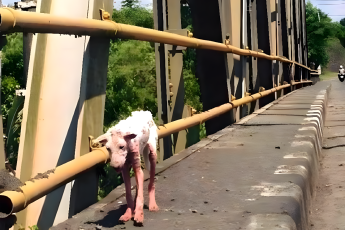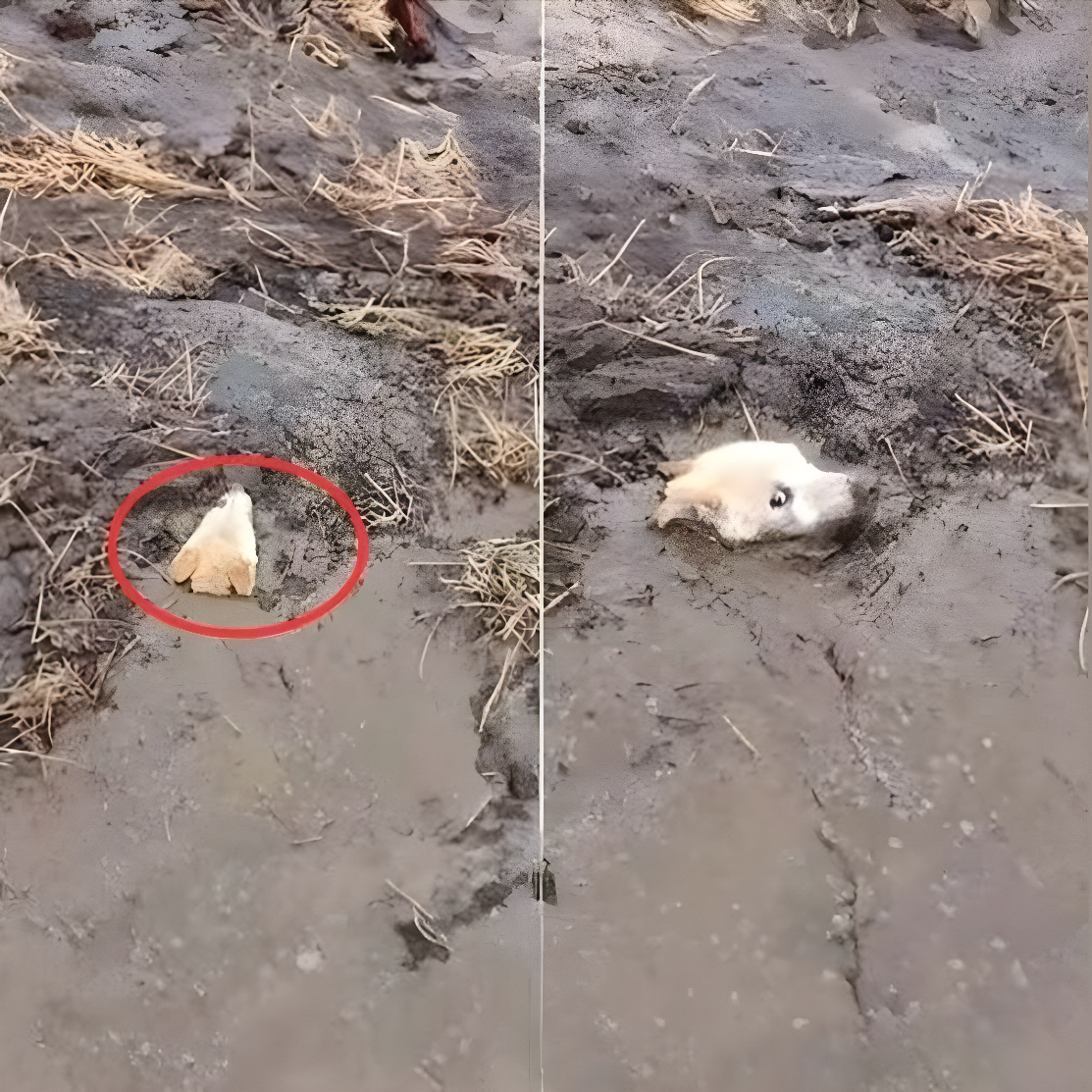
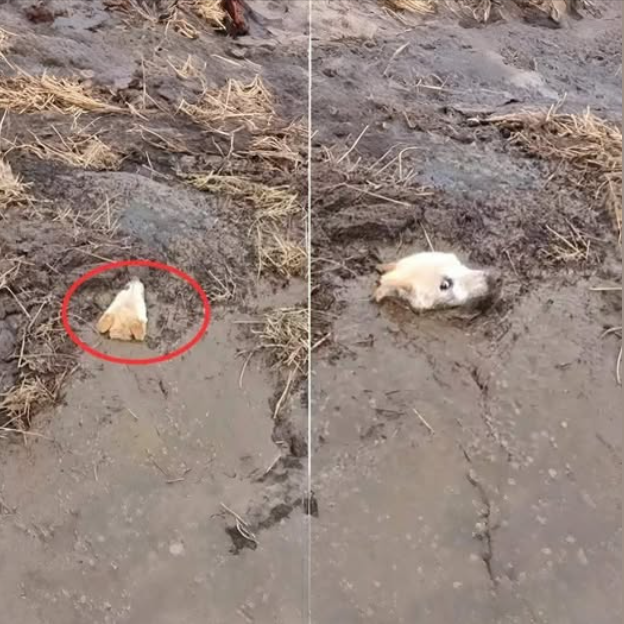
 The first observers assumed it was discarded trash. In the shallow trough left by the rain, water pooled and heavy clay clung to boots; the path had narrowed into a tramline people avoided by stepping sideways. Amid the gray-brown sludge something pale jutted out — at first glance like crumpled packing foam. Wind moved the grass, water sloshed, mud burbled — and a longer look revealed that the pale lump wasn’t inert: it blinked.
Two tiny pinprick eyes and drooping ears, plastered with wet earth. A dog’s skull, compressed and protruding, emerged from the sticky mass while the rest of the body lay swallowed by soil. Around the neck a cord had left a groove, tightened so firmly the mud seemed to try and conceal the evidence. The muzzle was slightly open — not in anger, but in a last attempt for air. Every moment felt like the slow motion of someone sinking.
“Something’s alive there,” Ania whispered, stopping in her tracks.
Sergiusz at first could not bring himself to accept it. When sunlight broke through a cloud and flashed off the standing water, the motion of the head looked too deliberate for a discarded object and too hopeless to be random.
“It’s a dog,” he said and moved down the bank. “Hold on, little one.” They dug with their hands, shoveling away the thick mud, pressing a scarf underneath, begging the neighbor for water from a bucket, until at last they pulled the heavy, silt-covered body free. The animal shivered almost imperceptibly. They laid it on an old blanket from the trunk, covered it, pressed it close for warmth.
At the clinic the veterinarian’s assessment was blunt: hypothermia, severe emaciation, risk of aspiration. Warmth first, then intravenous fluids. Oxygen was provided, a heated drip started, and the thin, soaked coat was wrapped in a dry towel. Ania sat beside the stretcher and watched the small frame that still had eyes — wide, alert, not pleading but announcing, “I am here. I am still here.”
“Does she have a name?” the nurse asked.
“No name,” Sergiusz replied.
“She will,” Ania smiled. “Let’s call her Lada — may everything in her life go well.” And so Lada became the name she wore.
“One look, one breath beside you — sometimes that becomes a home.”
The first nights were hard: machines whirred, condensation ran on the windows, uncertainty lingered. Dawn changed everything; when Lada lifted her head and gave the tiniest wag of her tail, it was enough.
- Step-by-step recovery: warmth, fluids, rest.
- Simple comforts: a spot by the radiator, a bowl, a towel at the door.
- Slow relearning: grass is for running, not sinking; a leash is protection, not a trap.
At Ania’s apartment a warm corner appeared by the radiator, a steady bowl of water, and a towel to wipe wet paws. Lada slept fitfully, checking where people were, sometimes pressing her neck against the wall as if searching for the loop that once choked her — and Ania would murmur, “Nothing will hurt you here anymore.” Neighbors dropped by with treats and supplies and asked the question everyone asked: “Who could do something like that? Why?” Sergiusz answered plainly: “Because someone believed they could get away with it. We decided not to.” Simple words that resonated.
Over time Lada relearned ordinary wonders. She discovered that a water bowl stayed full, that a leash meant safety rather than bondage, that grass could carry swift feet instead of dragging them down. Her face began to show a dog’s kind of joy: bright eyes and a tail that wrote sentences in the air.
The story of the dog from the mud spread online. People sent blankets, food, money for care; offers to adopt came in. But Ania and Sergiusz had already made their choice — Lada would stay. Home, they knew, is not always determined by paperwork; sometimes a single shared glance and a steady breath are enough to make a family.
Signs of trauma remained. Rainy nights sometimes made Lada start, as if the earth still tried to pull her under. In those moments Ania’s hand on her side was not to restrain but to remind her: you are safe here.
This is not the narrative of a miracle. It’s the account of an interruption — of people halting their day to respond when cruelty disguised itself as indifference. Evil often depends on bystanders shrugging; kindness can begin with five minutes and a warm scarf. The world can shrink to a pair of eyes peeking from filth, and then expand again to include a bowl, a blanket, a steady breath, and a quiet home.
When someone asks, “What can one person change?” Lada answers without words. She comes close, rests her muzzle across a knee, and breathes evenly — a small, unmistakable proof that a single act of compassion can rewrite a life.
Takeaways:
- Stopping to help matters — even a brief intervention can save a life.
- Recovery is gradual: warmth, medical care, consistent kindness.
- A home can be made by presence, not papers.
Conclusion
The dog pulled from the mud survived because two people chose to act. Their decision changed one animal’s fate and reminded a neighborhood — and anyone who hears the story — that responsibility and tenderness still matter. Lada’s steady breathing on a lap is the quiet answer to the question of what one person can do: enough to make a world whole again.