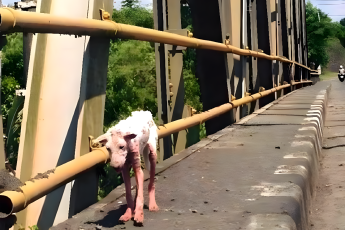
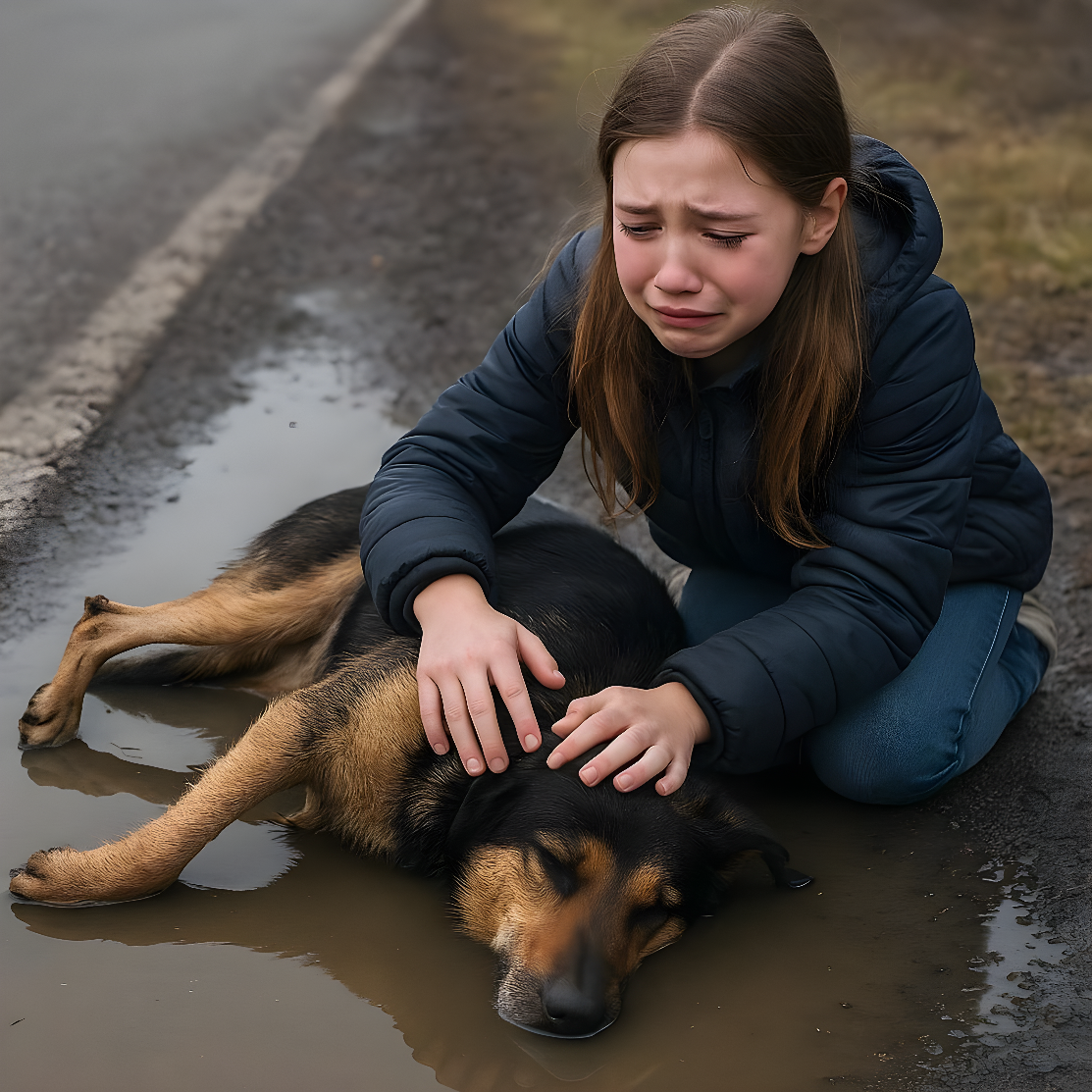
 It was Katya who knelt at the roadside and whispered, trembling: he’s still breathing. She reached out, her fingers slick with rain and grit, and touched the dog’s fur. The animal lay collapsed in a shallow puddle, mud and wet leaves clinging to him. A raw, broken limb stuck out at an impossible angle.
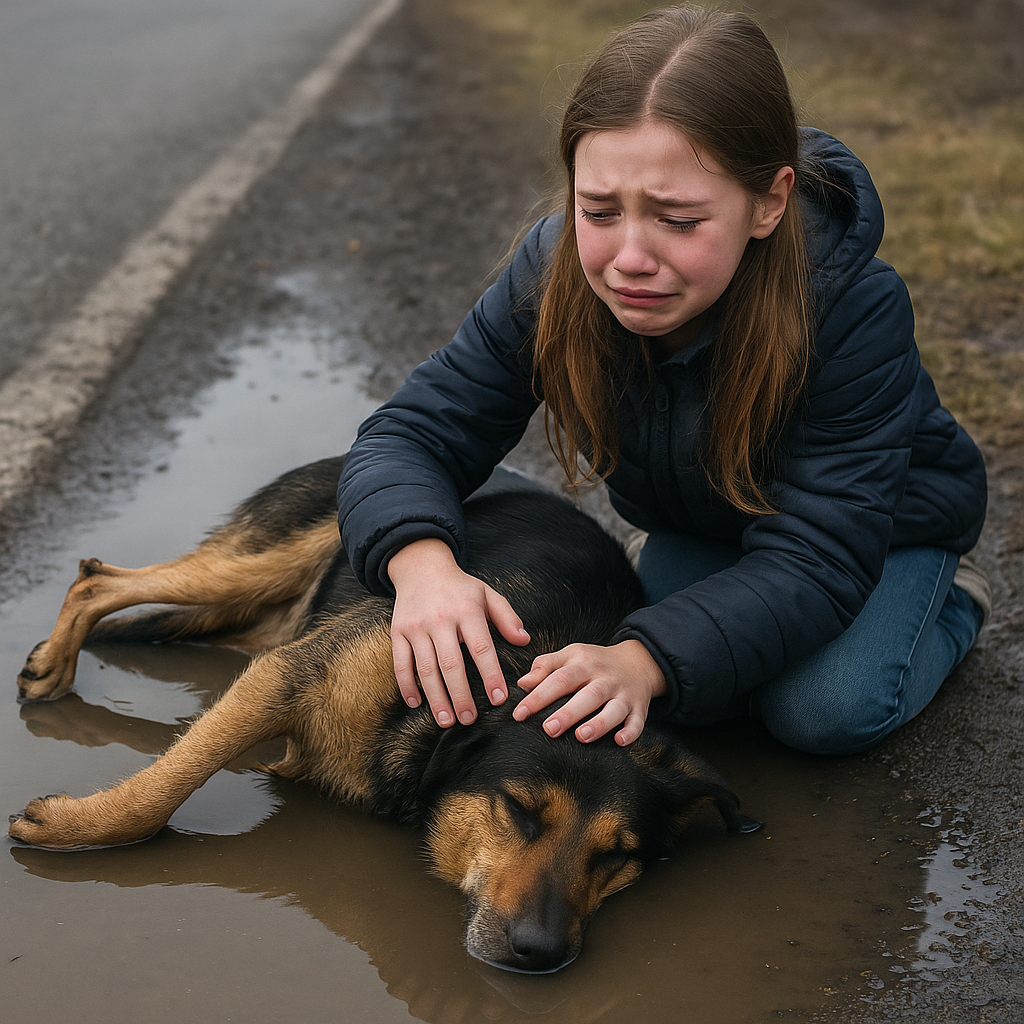 Closer, I almost looked away. Young, red-coated, and frightened, he couldn’t turn his head but his brown eyes were open — pleading, clear, and alive.
“Mom, can we leave him?” Katya’s voice cracked, but not with doubt. Her hand shook. I heard the question she didn’t speak: if our roles were reversed, would she want someone to walk away?
- Immediate decision: take the dog to a clinic.
- Obstacle: the cost of surgery—about twenty thousand.
- Risk: anesthesia might be too much for him.
I drew a slow breath. We had no spare money. One operation equaled almost my entire paycheck. When I mentioned that, Katya suggested her father. The memory of his last outburst — over a pair of sneakers — silenced her plea.
“We can’t afford it,” I told her. “If we try, we might lose more than the dog.”
She stayed. Fourteen, impossibly earnest. “I won’t ask for a phone. I won’t take the jacket. I’ll give up my birthday.” Her barter sounded like a grown person’s vow.
So we tried. We lifted him together, one of us at the shoulders, the other supporting the hindquarters. He whimpered, but offered no struggle. The veterinary clinic was cramped and smelled of antiseptic and worry. A young vet examined him and, without gentleness, delivered the facts: the back leg was destroyed; the only option was amputation. They must also check for internal injuries. Minimum cost: twenty thousand. Without surgery — euthanasia, kindly called.
Katya shot up from the chair. “Do it,” she said before I could answer. The vet shrugged and warned us the anesthesia could be fatal. We waited through four long hours. Katya never sat. I sipped bitter vending-machine coffee and thought about where I would find money for new winter tires.
When the doctor finally returned, his voice carried both relief and caution. “The leg’s gone, but he’s through the operation. The first day is critical.” He refused a visit — the dog slept off the drugs.
At home, Sergey was already waiting; his face told me enough. There was no bank notification needed to explain the missing money. He didn’t shout, but the ice in his voice felt like it might slice. “Twenty thousand for a mongrel?” He named the practical things: the car, the worn shoes, the bills stacking up. I tried to tell him about the dog’s eyes. He only saw obligations.
Katya answered firmly: “I’ll care for him. I’ll feed him, take him to appointments, after school and on weekends.” She meant it. She kept that promise.
The dog woke in a crate, bandages thick around the stump. He recognized us and twitched his tail. We discussed names. “Ginger?” I offered. “No,” Katya said, thinking like a child and an optimist: “Trishka — because he has three legs.” The name stuck.
We brought him home about a week later. The vet outlined the regimen: clean bandages, medication, strict rest, and no bearing weight on the amputated side. Trishka lay on an old blanket in the corner of the kitchen and stared at one spot. For days he wouldn’t eat or drink much. Katya read about canine depression and fed him nothing but small spoonfuls of soft food, coaxing him, talking to him for long stretches.
- Patience: daily care and gentle coaxing.
- Consistency: scheduled feedings and medications.
- Encouragement: lots of talking and small victories.
Sergey pretended indifference but checked the bowl when Katya left the room. Weeks passed. At first Trishka could only attempt to rise, fall, rest, and try again. Katya cried once, fearing he might never learn to move normally. The next morning he stood — unsteady, trembling — then fell and rose again. Each try built confidence.
“Good boy,” Katya would clap, smaller triumphs turning into daily celebrations.
Within a month he learned to navigate the house. By autumn he chased a ball in awkward bursts. Children on the street pointed and whispered. Sometimes their words were unkind: “Look, a dog without a leg!” Katya clenched her fists, but she didn’t answer. Trishka walked on, as if missing a limb had never been shameful.
Slowly, Sergey’s resistance thawed. He stopped scolding, then started bringing food, then, one evening, patted Trishka’s head. “Smart dog,” he muttered at dinner. Katya answered simply: “They’re all smart if you notice.”
One spring day changed everything. It was a busy park afternoon. A mother talked on her phone near a stroller that, unbraked, began to roll toward the roadway. People shouted. The stroller picked up speed. Only Trishka — three legs, wobbling, undeterred — was close enough to act. He lunged, slammed his chest into the stroller, and toppled it. The child cried for a second, then quieted: safe. Trishka lay nearby, breathing hard.
People gathered, praising and stroking him. The mother sobbed and hugged her child. For once the neighborhood’s curiosity turned to gratitude. That night Sergey’s tone had changed entirely: “We have a hero.” He sat on the floor and apologized to the dog, who licked his hand.
Years passed. Trishka aged into a quieter dog. He still met Katya after classes, though with less enthusiasm for long runs. Katya went on to veterinary school — she tells friends it was Trishka who set her path. She now studies animal rehabilitation and dreams of helping other injured pets relearn life.
Neighbors adore Trishka. Children bring treats. The mother whose child he saved returns sometimes with her son — now a serious schoolboy — and offers a small toy. Trishka sniffs it, wags, and settles at the boy’s feet. Sergey, once skeptical, takes him to the vet for vitamins and happily recounts Trishka’s past deeds to anyone who will listen.
What this taught us:
- Compassion can outweigh practical hardship.
- Some guardianship changes the caregiver as much as the cared-for.
- A single brave act can reshape a whole community’s view.
Five years on, we often say that we saved Trishka. In truth, he rescued us — from indifference, from hardness, from a readiness to look away. He proved that disability does not equal defeat. He taught a teenager to choose a career, warmed an uneasy husband’s heart, and pulled our family closer.
Conclusion
One injured dog became the catalyst for change. By choosing to help instead of walking past, a small household learned patience, responsibility, and love beyond appearances. Trishka’s three-legged gait reminded everyone that worth is not measured in limbs but in courage and heart. He is living proof: being different does not prevent a life from being full, meaningful, and heroic.
— Narrator